先に言っておきます。今日の記事は、いつもより長いです。

でも、育児中のパパとママ全員に関係する、大事な話です。ポテチでもつまみながら読んでください。

ことの発端は、体重計でした。前より、10kg増えていました。

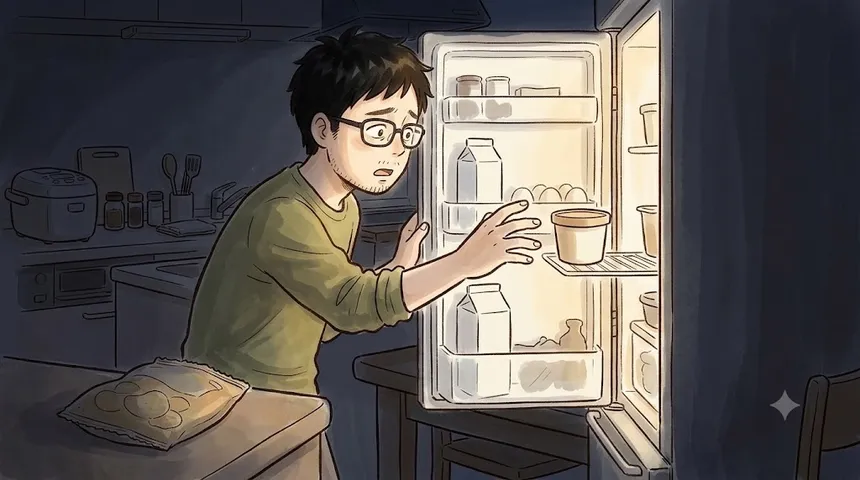
心当たりは、あります。午前3時、ミルクを作って赤ちゃんを寝かしつけたあと、冷凍庫の前で立ったままアイスを食べている男。あれは僕です。

意志が弱いからだと思っていました。違いました。

調べてみると、「寝不足だと太る」は、もうはっきり科学的に証明されていました。そして育児中の僕らは、その「寝不足」の実験条件を、毎晩 無意識に再現しています。

今日はその証拠を3つだけ紹介します。数字は全部、記事の最後に貼った論文のものです。僕は科学者ではありますが、乳児の専門家ではありません(引用元は専門家です)。
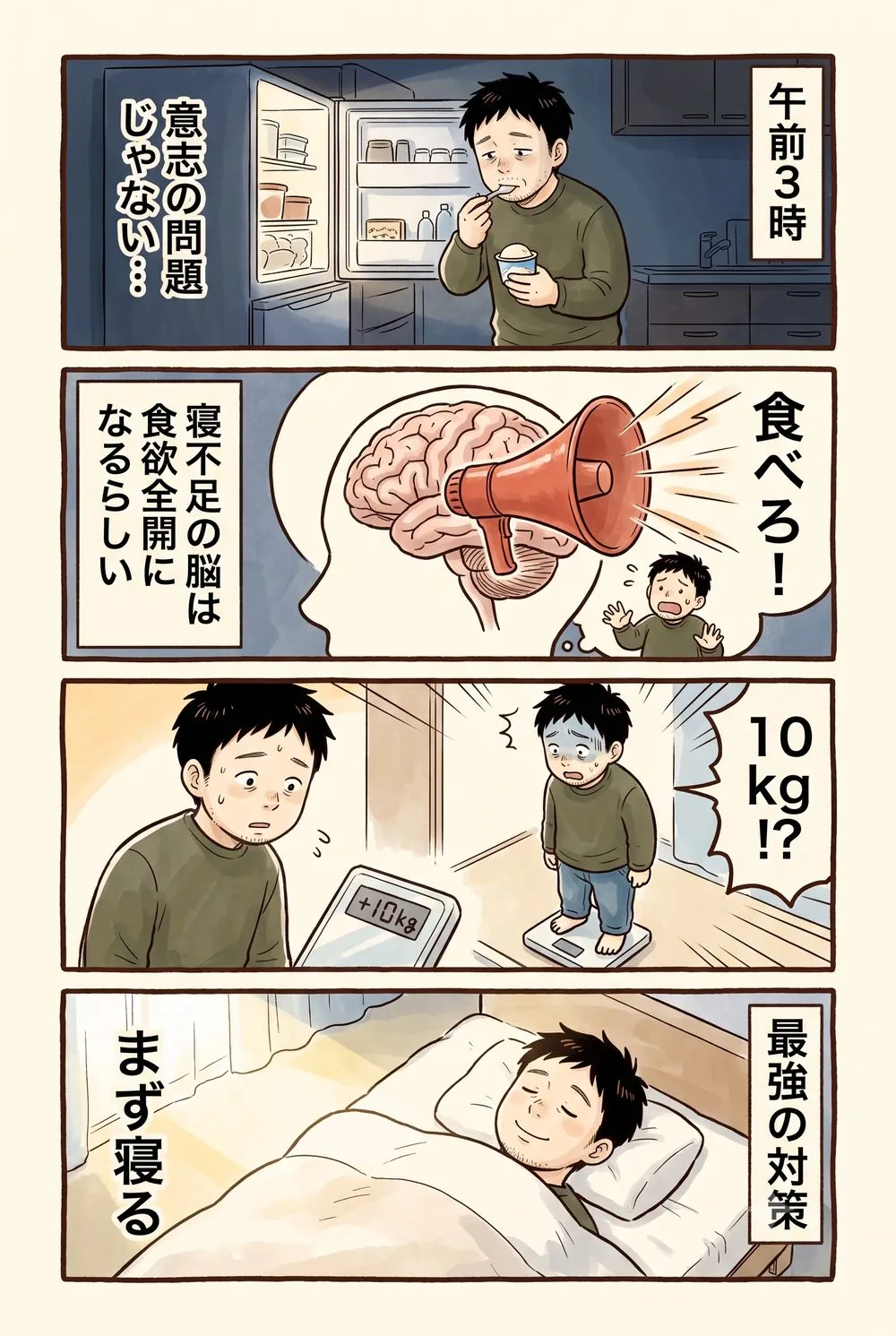
4コマ4コマ漫画。午前3時に冷凍庫の前でアイスを食べる父。寝不足の脳が食欲を全開にし、体重は10kg増。対策はまず寝ること。
4コマでわかる「深夜のアイス」の正体

目次

  1. 証拠1:睡眠を1.2時間増やしたら、食べる量が勝手に減った
  2. 証拠2:寝ないと、脂肪じゃなくて筋肉から減っていく
  3. 証拠3:寝不足の脳は、甘いものに投票する
  4. で、僕らはどうすればいいのか

証拠1:睡眠を1.2時間増やしたら、食べる量が勝手に減った

2022年、JAMA Internal Medicineという一流の医学誌に、こんな実験が載りました。

普段6.5時間未満しか寝ていない大人たちに、睡眠を1日あたり平均1.2時間だけ増やしてもらう。それだけです。運動の指示も、食事の指導もなし。

結果、たった2週間で、摂取カロリーが1日あたり約270kcal減りました。

270kcalは、だいたいカップのアイス1個です。寝ただけで、アイス1個ぶんの食欲が消えた。

逆に言えば、寝不足の僕らは毎日、アイス1個ぶんの「余計な食欲」を背負って戦っているということです。そりゃ負けます。
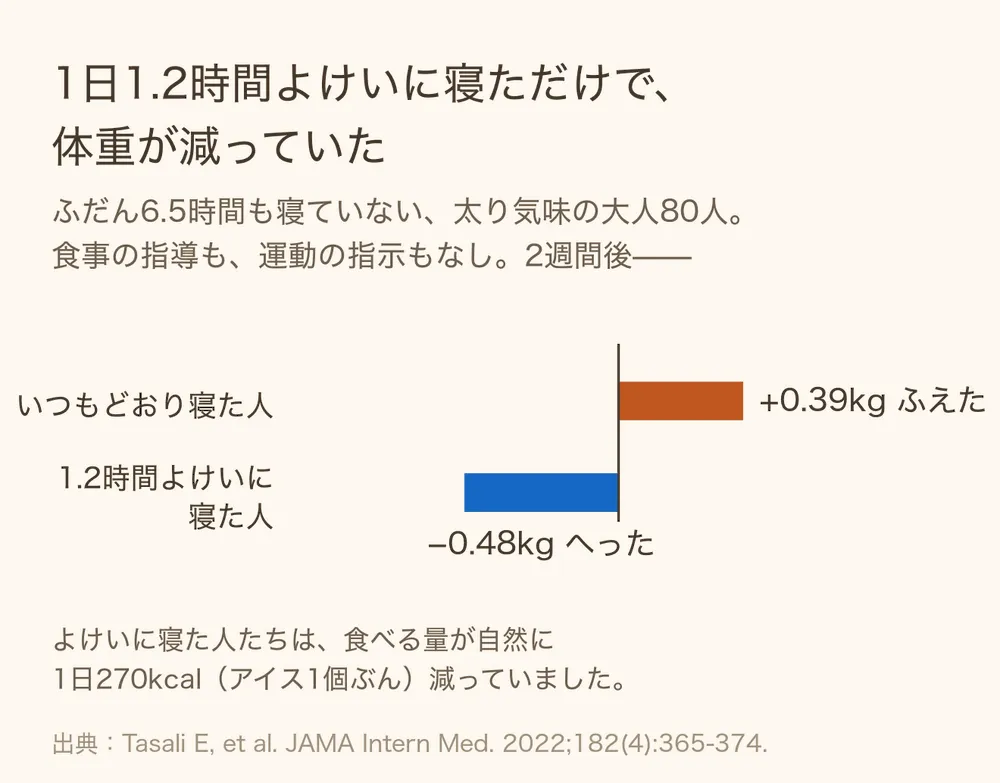
睡眠を1日1.2時間延ばした人は2週間で体重が0.48kg減り、いつもどおり寝た人は0.39kg増えたことを示す棒グラフ
食事も運動も変えず、寝ただけでこの差でした。

証拠2:寝ないと、脂肪じゃなくて筋肉から減っていく

もっと怖い研究もあります。

同じカロリー制限ダイエットをしてもらい、片方のグループは8.5時間、もう片方は5.5時間だけベッドにいる。体重は、どちらも同じくらい減りました。

ただし、中身が違いました。睡眠が短いグループは脂肪があまり減らず、代わりに筋肉が多く減っていたんです。

つまり寝不足のままダイエットすると、落としたいものが残り、残したいものが落ちる。在庫管理が下手な倉庫みたいなことが、体の中で起きます。
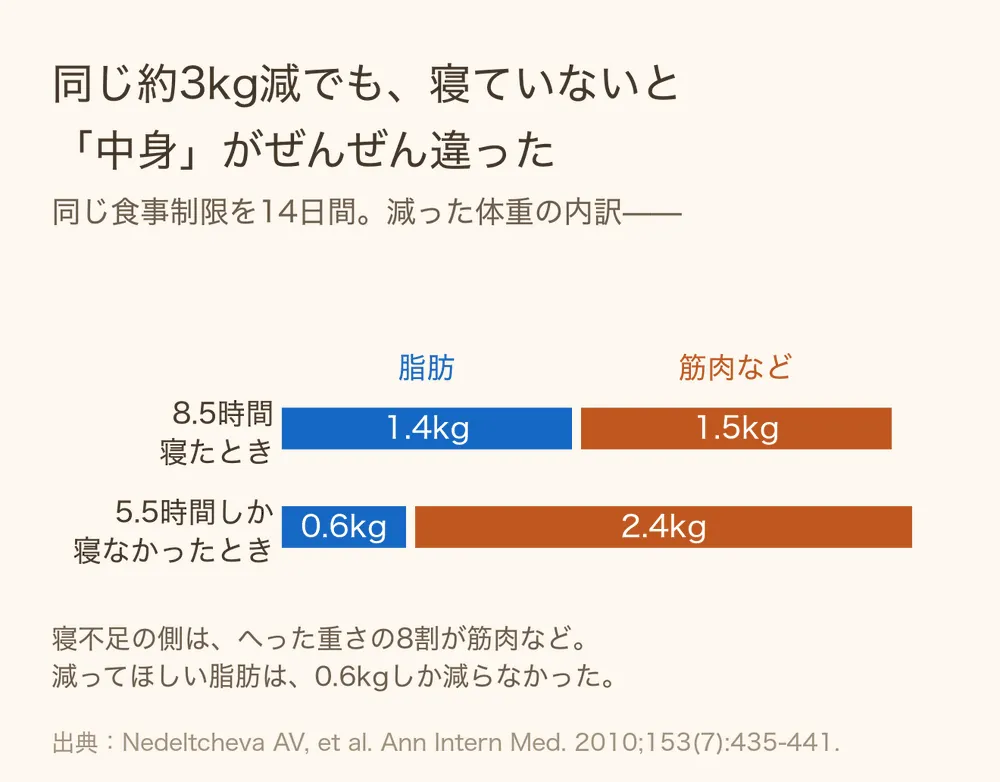
同じ食事制限で減った約3kgの内訳。8.5時間睡眠では脂肪1.4kg・筋肉など1.5kg、5.5時間睡眠では脂肪0.6kg・筋肉など2.4kgを示す帯グラフ
落としたいものが残り、残したいものが落ちる。

証拠3:寝不足の脳は、甘いものに投票する

実験室で睡眠を4〜5時間に制限すると、空腹感が増し、特に甘いもの・脂っこいもの・加工食品への欲求が強くなることが、繰り返し確認されています。

甘いもの、脂っこいもの。アイスとポテチ。うちの深夜のスタメン2枚が、論文に名指しされています。

増える摂取カロリーは1日200〜500kcal。しかも、その多くが夜の間食です。

午前3時のアイス。完全に論文どおりの行動でした。僕の意志ではなく、僕の脳の報酬系が投票した結果です。

ついでに言うと、1日4時間睡眠を14日間続けた実験では、摂取カロリーが約308kcal増えたうえ、内臓脂肪——いわゆるお腹の脂肪が増えました。つく場所が、一番よくない。
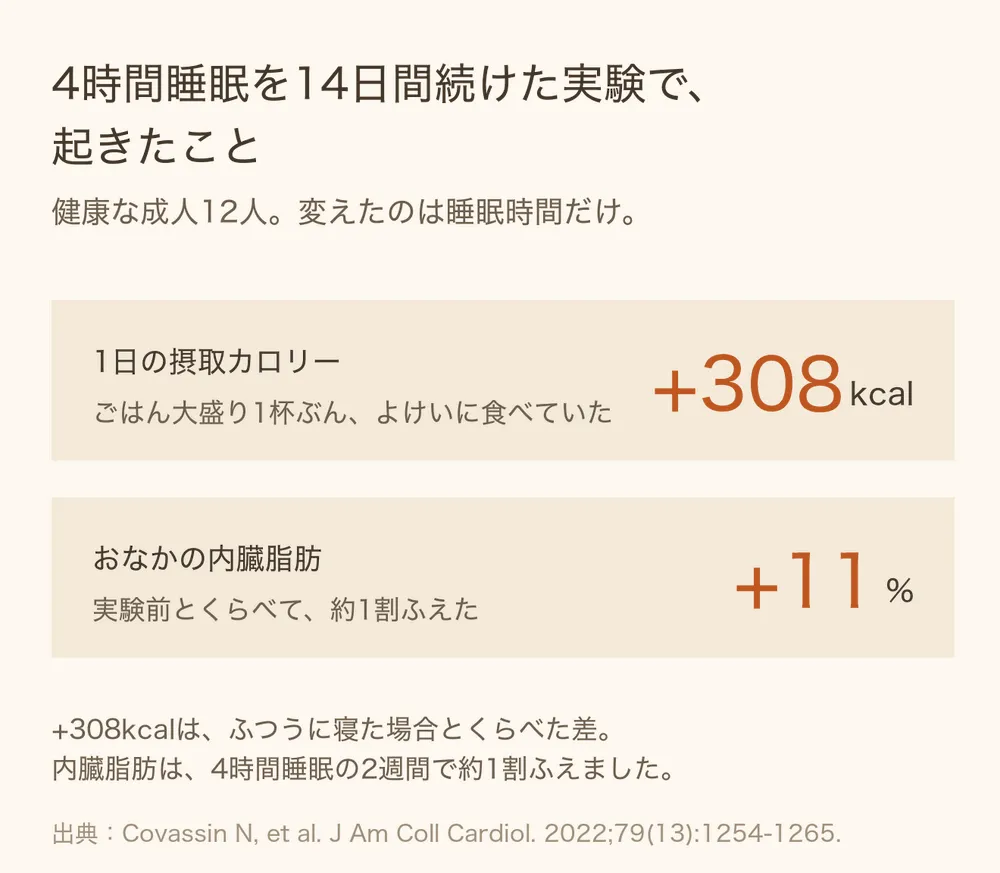
4時間睡眠を14日間続けると、1日の摂取カロリーが308kcal増え、おなかの内臓脂肪が約1割増えたことを示す図
つく場所が、一番よくないところでした。

で、僕らはどうすればいいのか

こうした論文の実践的な結論には、だいたいこう書いてあります。「7〜9時間の睡眠を目指しましょう」。

書いた研究者の家に、うちの0歳を一晩お届けしたい。

7時間連続で寝られるなら、そもそも悩んでいません。育児中の睡眠は、こちらの意志では増やせないんです。だから今日の結論は、対策の前に「まず知っておくこと」です。

  • 育児中に太るのは、意志の弱さではなく生理学。まず、自分を責めるのをやめる。
  • 寝られるチャンスがある日は、家事より睡眠を優先していい。それは怠けではなく、科学的に正しい健康管理。
  • 睡眠を増やせないなら、防衛線は「食べ物側」に張るしかない

それから、これは父親だけの話ではありません。夜間授乳をしている妻は、僕より深い寝不足の中にいます。

3つ目の「食べ物側の防衛線」は、次の記事で書きます。たんぱく質を軸にする話、授乳中の妻のための鉄分の話、そして鍋という、包丁をほぼ使わない文明の利器の話です。

にじパパのアバター
にじパパ
ひとこと

つまり、午前3時のアイスは僕の意志が負けたんじゃなくて、生理学が強すぎたという話です。

まとめ

寝不足だと太るのは、科学的事実です。だから育児中の体重増加は、意志の敗北というより、仕様に近い。

なお、この記事は例によって深夜に書いています。冷凍庫にはアイスが、戸棚にはポテチが待機しています。学びを、活かしていきたい。

参考にした研究

にじパパ「寝不足」関連記事

Midnight Ice Cream and Chips Weren’t Weak Willpower: Sleep Deprivation and Weight (A Serious One)

Fair warning: today’s post is longer than usual.

But it’s an important one for every mom and dad in the thick of it. Grab some chips and settle in.

It all started with the bathroom scale. It read 10 kg (about 22 lbs) more than it used to.

I had my suspicions about the cause. There’s a man who, at 3 a.m., having just mixed a bottle and gotten the baby back to sleep, stands in front of the freezer eating ice cream. That man is me.

I assumed it was weak willpower. It wasn’t.

When I dug into it, it turns out “sleep deprivation makes you gain weight” is already firmly established science. And those of us raising babies are unwittingly re-creating the exact “sleep-deprived” experimental conditions, every single night.

Today I’ll share just three pieces of evidence. Every number comes from the papers linked at the end of this post. I’m a scientist, but not an expert on infants (my sources are).

Table of Contents

  1. Evidence #1: Adding 1.2 hours of sleep made people eat less, all on its own
  2. Evidence #2: Skimp on sleep, and you lose muscle instead of fat
  3. Evidence #3: A sleep-deprived brain votes for sweets
  4. So what are we supposed to do?

Evidence #1: Adding 1.2 hours of sleep made people eat less, all on its own

In 2022, JAMA Internal Medicine — a top-tier medical journal — published an experiment that went like this.

Take adults who normally sleep less than 6.5 hours a night, and have them extend their sleep by an average of 1.2 hours per day. That’s the whole intervention. No exercise instructions, no dietary coaching.

The result: in just two weeks, calorie intake dropped by about 270 kcal per day.

270 kcal is roughly one cup of ice cream. Just by sleeping, one ice cream’s worth of appetite vanished.

Flip that around, and it means those of us running on no sleep march into battle every day carrying one extra ice cream’s worth of appetite. Of course we lose.

Bar chart showing that people who extended sleep by 1.2 hours a day lost 0.48 kg in two weeks, while those who slept as usual gained 0.39 kg
No change in diet or exercise — just sleep, and this was the gap.

Evidence #2: Skimp on sleep, and you lose muscle instead of fat

There’s an even scarier study.

Two groups follow the same calorie-restricted diet; one group gets 8.5 hours in bed, the other only 5.5. Both groups lost about the same amount of weight.

But the contents were different. The short-sleep group lost hardly any fat — instead, more of what they lost was muscle.

In other words, diet while sleep-deprived and the thing you want gone stays, while the thing you want to keep disappears. Your body starts running like a warehouse with terrible inventory management.

Stacked bar chart breaking down roughly 3 kg lost on the same diet: with 8.5 hours of sleep, 1.4 kg of fat and 1.5 kg of muscle and other lean mass; with 5.5 hours of sleep, 0.6 kg of fat and 2.4 kg of muscle and other lean mass
What you want to lose stays; what you want to keep goes.

Evidence #3: A sleep-deprived brain votes for sweets

When sleep is restricted to 4–5 hours in the lab, hunger increases — and cravings for sweet, fatty, and processed foods in particular get stronger. This has been confirmed again and again.

Sweet things. Fatty things. Ice cream and potato chips. My entire late-night starting lineup, called out by name in the literature.

The extra intake comes to 200–500 kcal per day. And much of it arrives as evening snacking.

The 3 a.m. ice cream was textbook behavior, straight out of the papers. It wasn’t my will that decided — it was my brain’s reward system casting the vote.

One more, while we’re at it: in an experiment where people slept 4 hours a night for 14 days, calorie intake rose by about 308 kcal — and visceral fat, the fat deep in the belly, increased. Of all the places to store it, that’s the worst one.

Diagram showing that 14 days of 4-hour sleep increased daily calorie intake by 308 kcal and increased abdominal visceral fat by about 10 percent
And it settled in the worst possible spot.

So what are we supposed to do?

The practical-takeaway section of these papers usually says something like: “Aim for 7–9 hours of sleep.”

I would like to deliver our baby to that researcher’s house for one night.

If I could sleep 7 hours straight, I wouldn’t be in this mess to begin with. During the baby years, sleep isn’t something you can increase by force of will. So today’s conclusion comes before any countermeasures — it’s simply what to know first.

  • Gaining weight while raising a baby isn’t weak willpower — it’s physiology. Step one: stop blaming yourself.
  • On days a chance to sleep appears, it’s okay to put sleep ahead of housework. That’s not laziness; it’s scientifically sound health management.
  • If you can’t add sleep, your defensive line has to be drawn on the food side.

And this isn’t just a dad thing. My wife handles the overnight nursing, and she’s running an even deeper sleep deficit than I am.

That third point — the food-side defensive line — is what the next post is about: building meals around protein, iron for my breastfeeding wife, and nabe (Japanese hot pot), a marvel of civilization that barely requires a knife.

にじパパのアバター
にじパパ
ひとこと

In short: the 3 a.m. ice cream wasn’t my willpower losing. It was physiology being too strong.

Wrapping up

Sleep deprivation causes weight gain — that’s scientific fact. So the weight you put on while raising a baby is less a defeat of willpower and more of a built-in spec.

For the record, I’m writing this post in the middle of the night, as usual. Ice cream is standing by in the freezer, chips in the cupboard. Here’s hoping I put today’s learnings to use.

Studies referenced

More from Nijipapa on sleep deprivation